Software that pays attention

Most software waits for you. It stores what you file, retrieves what you search, generates what you ask. It's responsive in the literal sense — it responds. None of it notices. We build the opposite.

Software should notice,
not just respond

A thoughtful human assistant doesn't store information. They notice it. They keep a continuously updated model of what is alive, what is unresolved, what is quiet but not dead. We build that layer.

Notices, doesn't wait
Most software waits to be asked. Ours notices on your behalf — anchors, patterns, dysregulation, what you've put off. The model is the product.
Research-backed
Every feature earns its place with evidence. We build on peer-reviewed research — not trends, not guesses, not what's popular on Product Hunt.
Knows when to step back
Two of our products teach you to notice for yourself, then graduate. One of them notices for you forever. Either way, the app's purpose is not to keep you.

Three products,
three attention surfaces

SteadyKit notices when to teach a skill. Tiny notices the anchor moment. Lila notices the whole operational life.

Waitlist open
SteadyKit
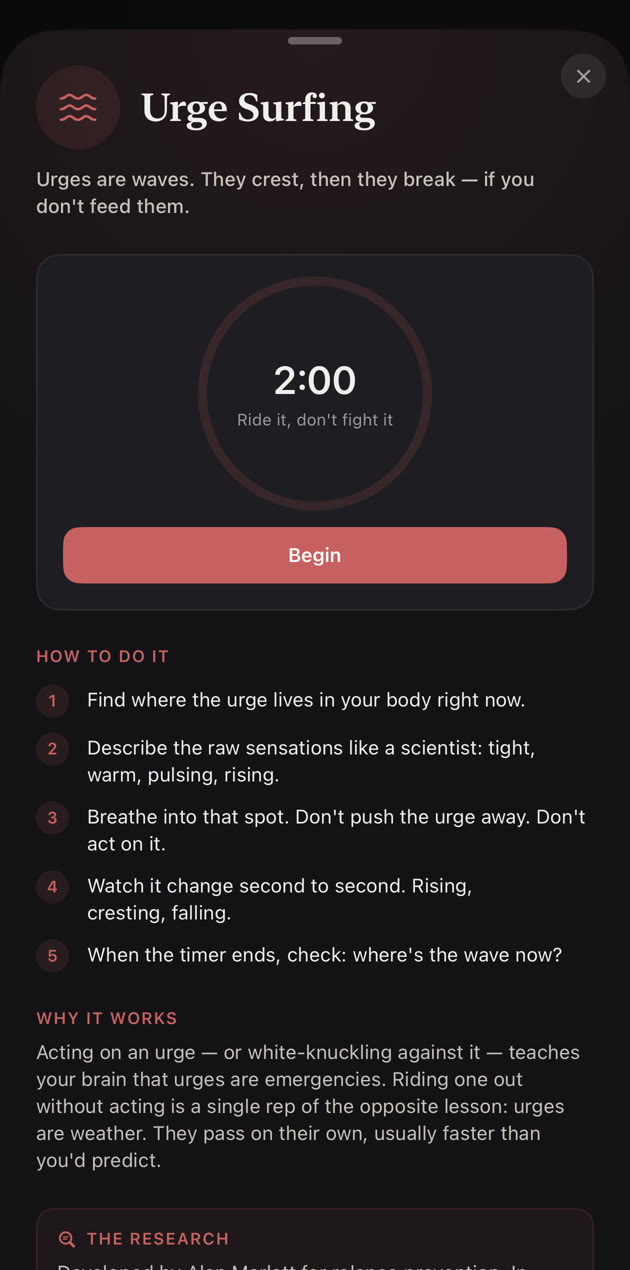
Notices when your nervous system is dysregulating and meets you with the right skill in the moment. A 180-day iOS companion built on a 179-skill library spanning ERP, ACT, and CBT, with belt progression earned by skill proficiency, not calendar time.

SteadyKit ends — your dependence on the app for managing anxiety.

  • 180-day structured curriculum
  • Sage validates and reflects — never reassures
  • ERP, ACT, CBT in a single library
  • Designed to graduate you out
Learn more
Today's Session
Cyclic Sighing
breathing
Breathe Learn Practice
Continue Session
TestFlight
Lila
The attention layer for the operational life behind your work and your relationships. One brand, two surfaces — Lila: Life OS on iOS, and Lila Core, the open-source persistent-operator runtime that powers it.

Lila ends — having to be your own attention layer.

  • Generative working memory — home screen written by the system
  • Source-ID receipts on every surfaced item
  • Nightly LLM-driven consolidation
  • Open-source runtime · MIT-licensed
Learn more
// what i noticed
This week: the cover letter (due Friday), Megan's IEP meeting Thursday.
Open with Susanna: the bathroom tile decision, the weekend with her parents.
Quiet but not forgotten: the Third Period Labs outreach you captured 17 days ago.
Coming Summer 2026
Tiny
Notices the anchor moment in your day and prompts the tiny behavior right there. A SwiftUI habit tracker built on BJ Fogg's Tiny Habits method — anchor, tiny behavior, celebration, shrink. Not a streak counter.

Tiny ends — when habits become automatic.

  • Anchor-first design — no anchor, no habit
  • Celebration as ritual, not toast
  • Shrink mode for rough days
  • Native SwiftUI

Want early access? Drop us a line.

Tiny
In the workshop

Four principles,
no exceptions

01
Respect attention
The user's attention is the scarce resource. We never compete for it. We never engineer for it. We never measure success by how much of it we've consumed.
02
Earn every feature
A feature ships when it makes the product better at noticing. Not because it's expected. Not because the category leader has it. The feature has to earn its place on your home screen.
03
Be honest about AI
The model has limits. We name them. We surface uncertainty. When the system is confident, it speaks confidently. When it is guessing, it says so. We don't dress up retrieval as judgment.
04
Build the exit door
For SteadyKit and Tiny, we build graduation explicitly — the scaffold comes down. For Lila, we build infrastructure that is quiet, reliable, and minimal. Either way, the app's purpose is not to keep you.